
uPVC vs. Thermal Break Aluminum Windows: Which is Best for Islamabad’s Climate?
Building or renovating a home in the twin cities comes with a unique set of challenges. Between the scorching summer heat of July, the heavy torrential downpours of
Building or renovating a home in the twin cities comes with a unique set of challenges. Between the scorching summer heat of July, the heavy torrential downpours of the monsoon season, and the increasing traffic noise along major expressways, standard glass and wooden frames no longer cut it.
When upgrading a property’s facade, homeowners and architects usually narrow their choices down to two premium materials: uPVC (Unplasticized Polyvinyl Chloride) and Thermal Break Aluminium. Both offer massive upgrades over traditional wood or iron, but which one is truly the best fit for Islamabad’s specific climate?
Let’s break down the comparison across four critical factors: heat resistance, soundproofing, maintenance, and overall cost.
1. Energy Efficiency & Summer Heat Resistance
Islamabad summers can push temperatures well above 40°C. If your windows conduct heat, your HVAC system has to work overtime, leading to skyrocketing electricity bills.
Standard aluminium is a highly conductive metal, meaning it transfers outside heat directly into your living room. However, modern Thermal Break Aluminium solves this by inserting a polyamide plastic barrier between the inner and outer metal frames, stopping the heat transfer dead in its tracks.
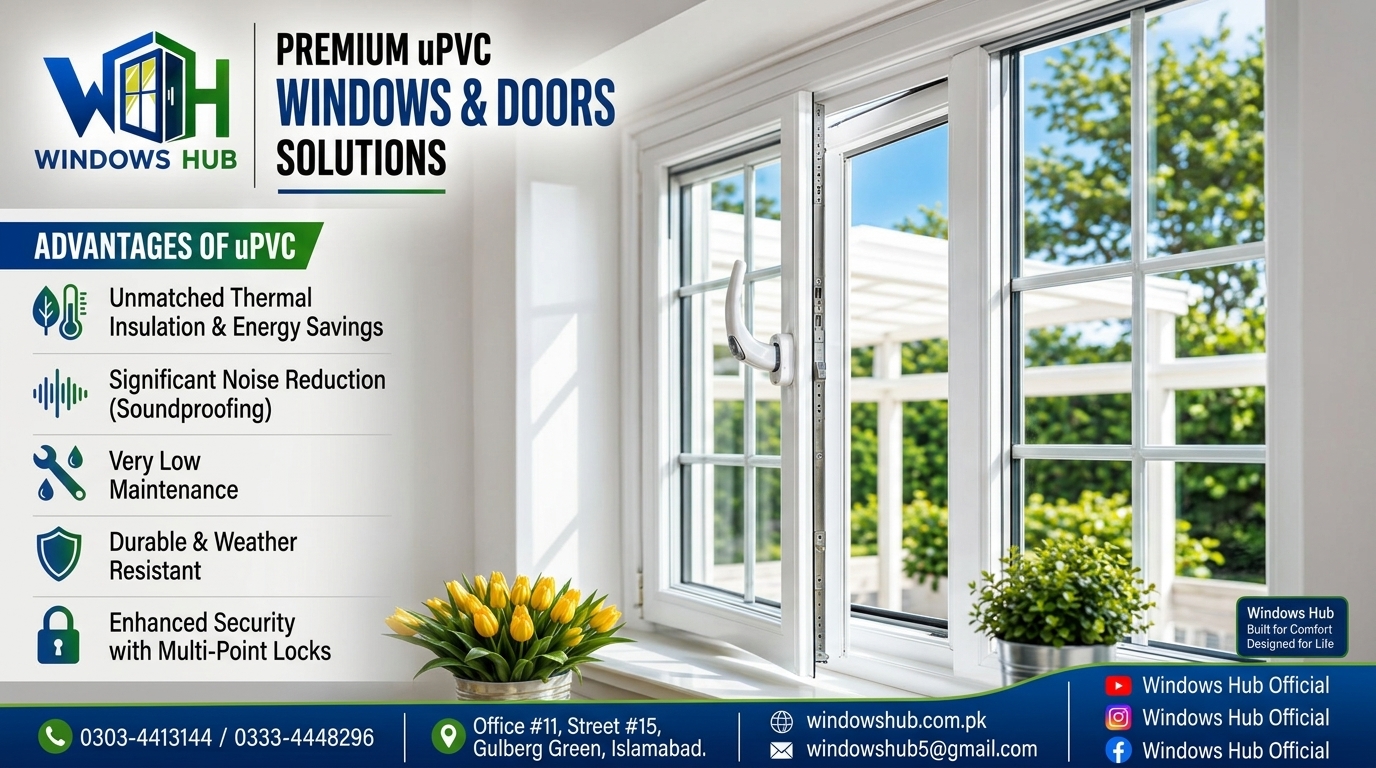
Conversely, uPVC is a natural insulator. The frames are built with multiple internal air chambers that trap heat, preventing it from entering the home. While both premium options perform exceptionally well, custom uPVC windows slightly edge out aluminum in pure thermal insulation, making them the most cost-effective choice for reducing air conditioning loads in Pakistan.
2. Soundproofing Against City Noise
If your property is located near the Islamabad Expressway, Srinagar Highway, or busy commercial sectors like Blue Area, acoustic insulation is just as important as thermal insulation.
Noise reduction relies heavily on the glazing (glass) rather than just the frame. Double-glazed units (DGU) filled with argon gas are the gold standard for blocking out traffic noise. Both uPVC and heavy-duty aluminium profiles are designed to carry thick, double-glazed glass. However, because uPVC frames are welded at the joints rather than mechanically screwed together like aluminum, they create an airtight, seamless seal that generally offers superior sound dampening, blocking up to 40 decibels of exterior noise.
3. Monsoon Durability & Maintenance
Wooden windows warp, swell, and require repainting after a few heavy monsoon seasons. Both uPVC and aluminium are completely immune to termites, rotting, and warping.
Aluminium is celebrated for its incredible structural strength. It can support massive panes of architectural glass with incredibly slim frames, making it the go-to choice for modern, minimalist luxury villas and commercial high-rises. It is powder-coated, meaning it resists rust and fading for decades.
uPVC is equally low-maintenance and is reinforced with an internal core of galvanized steel to withstand gale-force winds. It never requires repainting; a simple wipe-down with soapy water keeps it looking brand new.
4. Cost and Architectural Flexibility
Budget is often the deciding factor in large-scale residential projects.
uPVC is generally more budget-friendly than thermal break aluminium. It offers an incredible return on investment when factoring in the monthly energy savings and zero maintenance costs.
Thermal Break Aluminium is a premium architectural product. Because the manufacturing process is more complex, it comes at a higher price point. However, if your architectural design calls for massive floor-to-ceiling sliding doors or expansive bifolding patio systems, thermal break aluminum systems are unmatched in their ability to hold heavy glass with very thin sightlines.
The Verdict
There is no single “wrong” choice, provided you are sourcing materials from a legitimate manufacturer rather than a low-tier assembler.
- Choose uPVC if your primary goals are maximum energy efficiency, superior soundproofing, and cost-effectiveness for a residential home.
- Choose Thermal Break Aluminium if you have a larger budget and want ultra-slim frames, massive glass panels, and a sleek, contemporary architectural aesthetic.