
miswak-siwak-manufacturing-export-pakistan
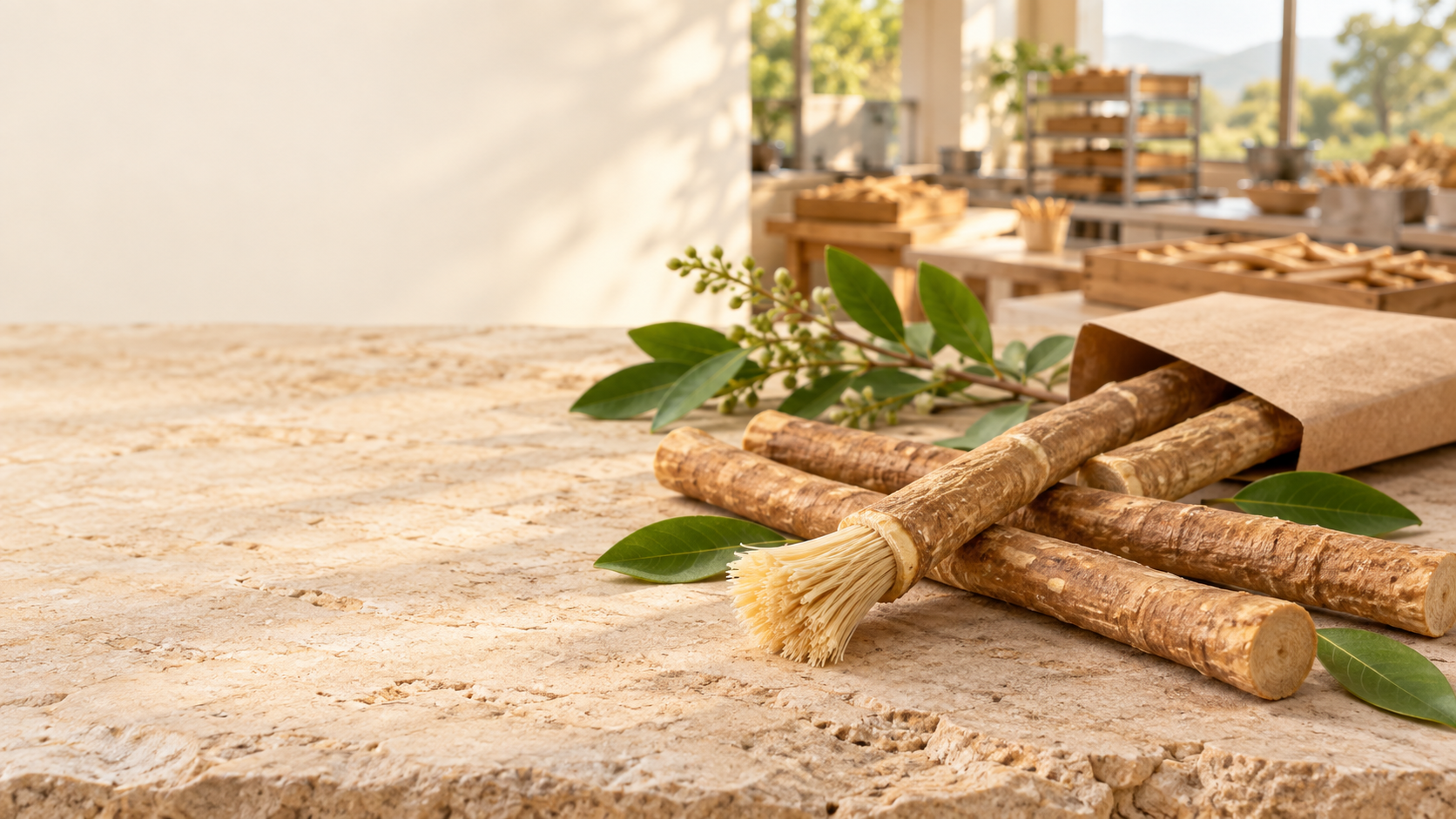
Miswak: The Natural Toothbrush with Global Potential Miswak has been used as a natural oral hygiene tool for generations. Today, interest in traditional products, plastic-free alt
Miswak: The Natural Toothbrush with Global Potential
Miswak has been used as a natural oral hygiene tool for generations. Today, interest in traditional products, plastic-free alternatives and plant-based personal care is bringing the miswak stick to a wider international audience.
For businesses, miswak offers a product with cultural history and export potential. Building trust in global markets depends on more than tradition: buyers also look for reliable sourcing, hygienic processing, consistent quality, clear packaging and compliance with destination-country requirements.
What is miswak?
Miswak, also spelled siwak, is a chewing stick commonly prepared from the Salvadora persica plant. The end of the stick is softened by chewing or trimming to form brush-like fibres, which are used to clean the teeth.
Miswak is a familiar oral care product in parts of the Middle East, South Asia and Africa. Its use is also associated with cultural and religious traditions. As international consumers explore traditional oral care and low-waste products, the miswak natural toothbrush is gaining visibility in more markets.
Why are people interested in miswak?
A miswak stick is compact, portable and ready to use without a plastic handle or a separate brush head. Some consumers value its traditional use; others are interested in trying a plant-based oral care option.
Research has examined miswak’s role in plaque control and gum health, but results vary across studies and methods. Reviews suggest that Salvadora persica chewing sticks may help control plaque, while also noting differences in study methods. Miswak should therefore be marketed carefully: avoid promising that it prevents or cures dental disease. Evidence-based review of miswak and oral health, systematic review comparing miswak and toothbrushes
For consumers, good technique matters. Miswak can complement an oral care routine, but people with dental concerns should follow advice from a dental professional.
How is miswak manufactured?
A dependable miswak manufacturing process starts with suitable raw material and follows clear hygiene and quality procedures. Exact methods differ by producer, but a responsible production workflow generally includes these stages:
1. Source and identify the raw material
Work with traceable suppliers and verify the plant species and origin. Buyers increasingly want to know where the miswak comes from and how it is harvested. Sustainable sourcing helps protect the supply chain and supports long-term business relationships.
2. Inspect and sort the sticks
Inspect incoming material for visible damage, contamination, mould, pests, unusual odours and inconsistent size. Sort sticks by length, thickness and appearance to create uniform product grades.
3. Clean and prepare
Remove dirt and loose outer material using a documented, hygienic process suitable for the product. Keep the product protected from avoidable contamination during handling, cutting and preparation.
4. Cut and grade
Cut sticks to the selected retail or wholesale size. Consistent dimensions make the product easier to package, display and use. Record the grade and batch so products can be traced if a quality issue arises.
5. Package for freshness and protection
Choose packaging appropriate for the product and intended market. Packaging should protect the miswak stick from dirt, moisture changes and damage during storage and transport. Labels should clearly identify the product and include the details required in the destination market.
6. Store and prepare orders
Keep finished products in clean, controlled storage conditions and use a first-in, first-out inventory system. Maintain batch records and inspect export orders before dispatch.
What should buyers look for in a quality miswak stick?
Whether buying for personal use or sourcing miswak wholesale, look for:
- Clear product identification and botanical name
- Consistent size and grading
- Clean appearance and suitable packaging
- Batch or lot traceability
- Transparent sourcing information
- Storage guidance and a stated shelf-life basis, where applicable
- Supplier documentation relevant to the target market
A professional miswak supplier should be able to explain how the product is sourced, handled, graded and packed. Buyers should request samples and confirm that the product matches the agreed specification before placing a large order.
Exporting miswak: a practical checklist
The requirements for miswak export depend on the product form, country of origin and destination. A natural plant product may be subject to customs, plant-health, labelling or product-safety rules. Requirements can differ between markets, so exporters should verify them with the relevant authorities and their importer before shipping.
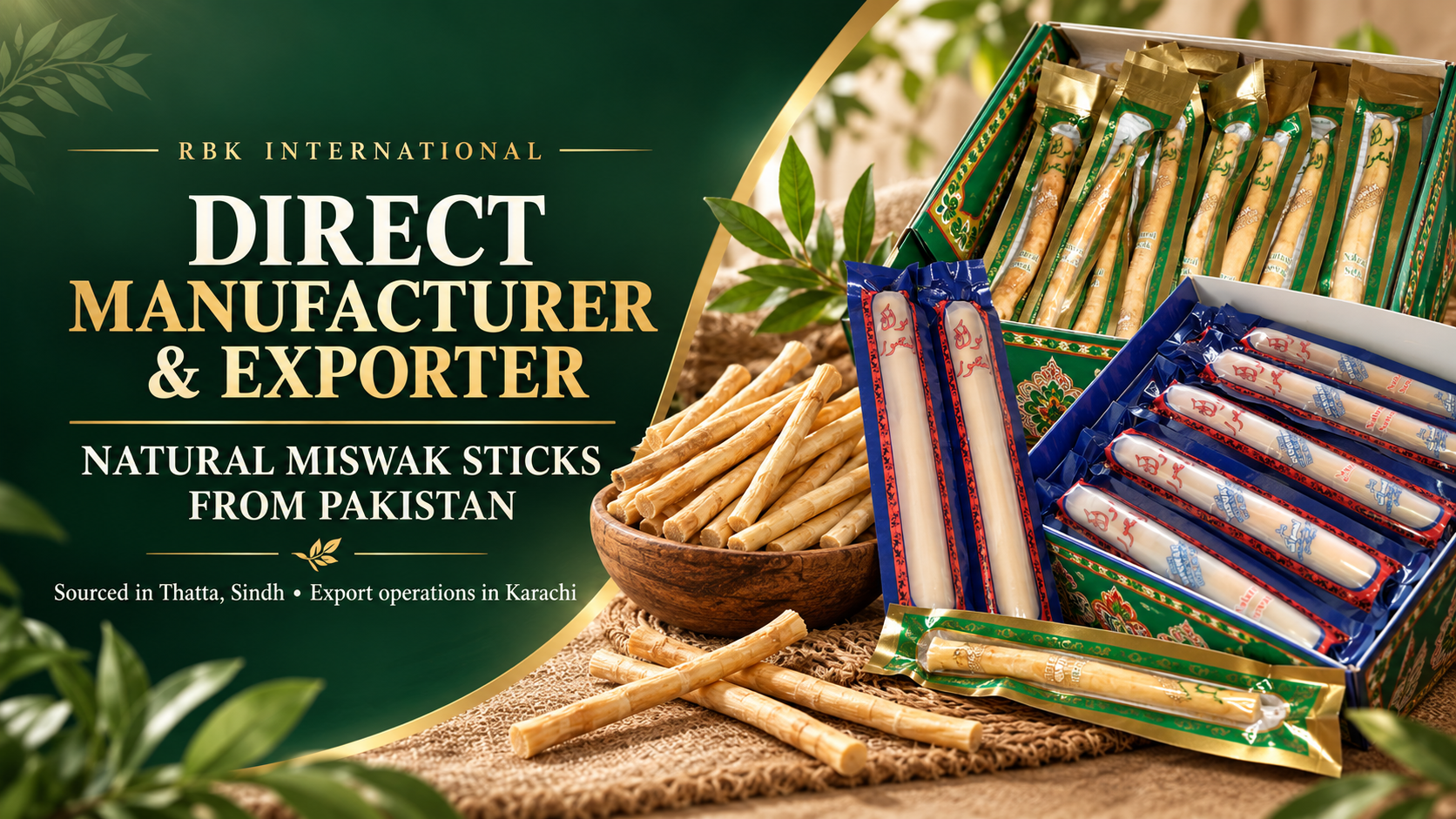
A practical export checklist includes:
- Confirm the product classification. Describe the product accurately and confirm the customs classification with a qualified customs broker or authority.
- Check plant-health requirements. Ask whether the destination requires an import permit, phytosanitary certificate, inspection or other documents.
- Prepare export paperwork. Confirm the commercial invoice, packing list, certificate of origin and other required documents with the importer and logistics provider.
- Review packaging and labelling rules. Check required languages, product descriptions, origin statements, warnings and importer details.
- Agree on quality specifications. Document the species, dimensions, grade, packaging, acceptable condition and order quantity.
- Plan transport and storage. Select packaging and shipping conditions that protect the product throughout the route.
- Keep records. Retain supplier, batch, inspection and shipment documents to support traceability.
Do not assume that one country’s paperwork or label will satisfy another country’s rules. Check the requirements for each destination before accepting an order or dispatching a shipment.
How to market miswak globally
A strong global product page or wholesale catalogue should explain what the product is, where it comes from, how it is prepared and how it should be stored. Use clear language for customers who may be discovering miswak for the first time.
Useful content themes include “What is miswak?”, “How to use a miswak stick,” “Miswak vs. a conventional toothbrush,” “How miswak is sourced and packaged,” and “Wholesale miswak and export information.”
Include search terms such as miswak stick, natural toothbrush, miswak manufacturing, miswak export, wholesale miswak and Salvadora persica where they fit naturally. Repeating keywords excessively can make a blog harder to read. Clear, accurate information is more useful to customers and buyers.
The future of miswak
Miswak connects traditional oral care with international interest in natural and portable products. Its prospects depend on dependable sourcing, consistent manufacturing, responsible claims and careful attention to export requirements.
For producers and exporters, the opportunity is to make a traditional product easy to understand and trust: explain its origin, maintain quality from harvest to shipment, and give buyers the information they need to make an informed decision.
We are already exporting miswak/siwak in Germany, Turkey, United Arab Emirates UAE, Kingdom of Saudia Arabia KSA, Egypt, Algria etc.
If you would like to import Miswak/Siwak in Bulk Quantity contact our sales team:
RBK International (Manufacturer and Exporter)
Email: info@rbkintl.com | export@rbkintl.com | www.rbkintl.com
Whatsapp: +923138932016